Hot
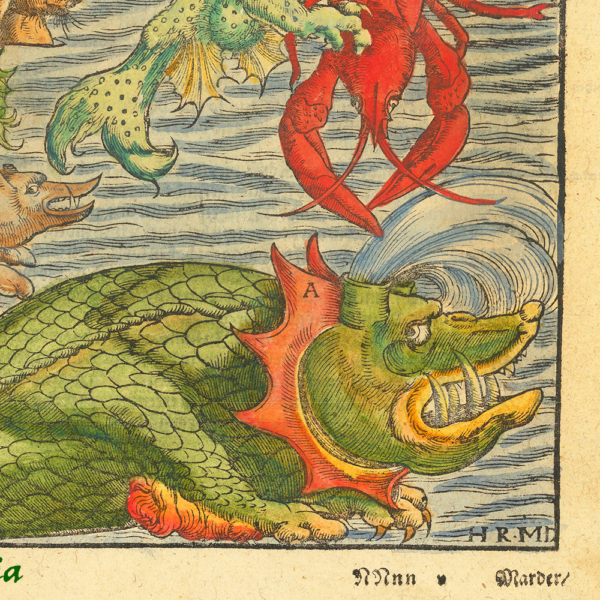
Monstra Marina et Terrestria 1000 piece Jigsaw
$ 45.84
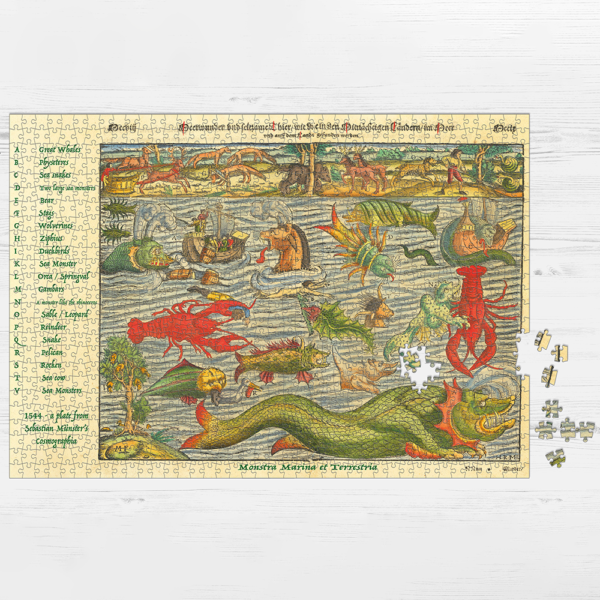
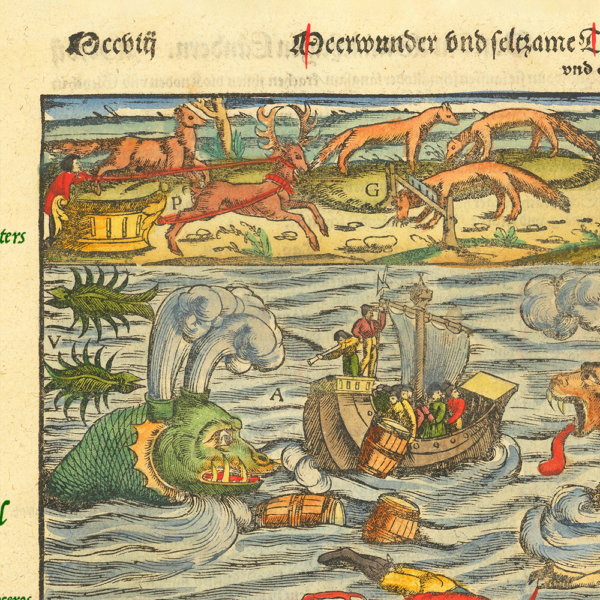
Description Sebastian Münster (20 January 1488 – 26 May 1552 was a German cartographer and cosmographer. He also was a Christian Hebraist scholar who taught as a professor at the University of Basel. His well-known work, the highly accurate world map, Cosmographia, sold well and went through 24 editions. Münster’s “Cosmographia” was a comprehensive geographical and cultural encyclopedia of the world during the Renaissance period. It included maps, illustrations, and descriptions of various creatures and phenomena from around the world. In the context of the Monstra Marina et Terrestria, many of these sea monsters were derived from earlier sources, particularly from a 1539 map of Scandinavia created by Olaus Magnus, a Swedish cartographer and ecclesiastic. While some of these sea monsters and creatures may seem fantastical and terrifying, it’s important to note that many of them were based on real observations and encounters by Scandinavian sailors and whalemen. During this era, there was limited scientific understanding of marine life, and sailors often reported sightings of unusual and large creatures in the oceans. Some of the creatures featured in Münster’s Monstra Marina et Terrestria may have been inspired by these encounters, of what were in all probability whales, giant squids, or other deep-sea creatures, which were interpreted through the lens of legend and imagination. These reports, combined with folklore and myths, contributed to the creation of these sea monster depictions. The chart also includes some land based fauna which included reindeer, beavers, wolverine, snakes and some sort of large cat. There is also a tree in the bottom left hand corner, inhabited by “duckbirds,” a unique type of bird that, according to Münster, “grows on trees”. Münster’s “Cosmographia” is a valuable historical document that provides insight into the knowledge and perceptions of the natural world during the Renaissance, blending elements of science, mythology, and exploration. It’s a testament to how the boundaries between fact and fiction were often blurred in the early days of mapmaking and natural history documentation.
Related Products